
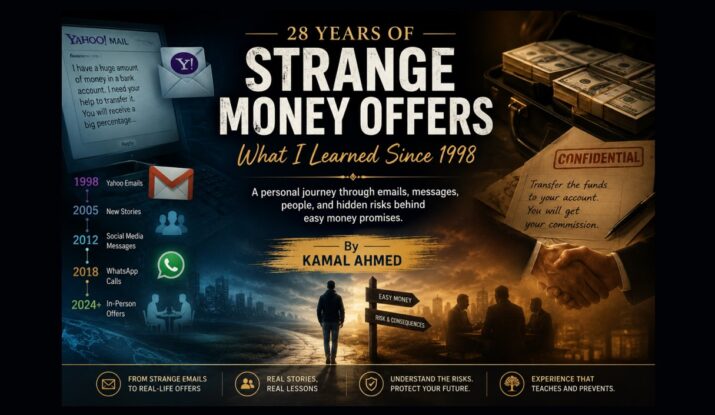
A personal reflection on trust, temptation, and financial risks observed over nearly three decades. Since 1998, strange messages about money have followed me through different stages of life.
Since 1998, I have been receiving strange offers about money.
At first, they came through Yahoo Mail. Later through Gmail, social media, WhatsApp, and eventually through real people in business circles. Over nearly three decades, I noticed the same pattern appearing again and again — only the methods changed.
In the beginning, the messages sounded almost unbelievable.
Someone would claim they had millions of dollars stuck in a foreign bank account. They said they needed a trustworthy person to help transfer the money, and in return they would share a large percentage. Sometimes they introduced themselves as bankers, government officials, lawyers, or relatives of wealthy individuals. The stories were always different, but the promise was similar: easy money for simple cooperation.
At that time, the internet was still new for many of us. Yahoo Mail was popular, and receiving international emails felt interesting. Out of curiosity, many people read those messages carefully. Some probably believed them. Others ignored them completely.
Over the years, I watched these approaches evolve.
The old email scams slowly became more professional. The communication style improved. The grammar improved. The people behind them became more patient and more intelligent in how they approached others.
Then social media arrived.
The unknown senders were no longer completely unknown. Sometimes they appeared connected through mutual contacts. Sometimes they built conversations slowly before mentioning money. Gradually, the methods moved from anonymous internet messages into more personal communication.
In recent years, I noticed something even more concerning.
The offers are no longer limited to emails or online platforms. Now these proposals sometimes come through familiar people, business contacts, or introductions from trusted circles.
It’s noticeable that modern financial crime networks increasingly avoid using obvious criminals.
Instead they prefer:
- small business owners,
- exporters,
- importers,
- consultants,
- logistics people,
- company directors,
- people with international accounts or connections.
Because:
- banks trust them more,
- transactions look normal,
- invoices can appear legitimate,
- cross-border payments seem business-related.
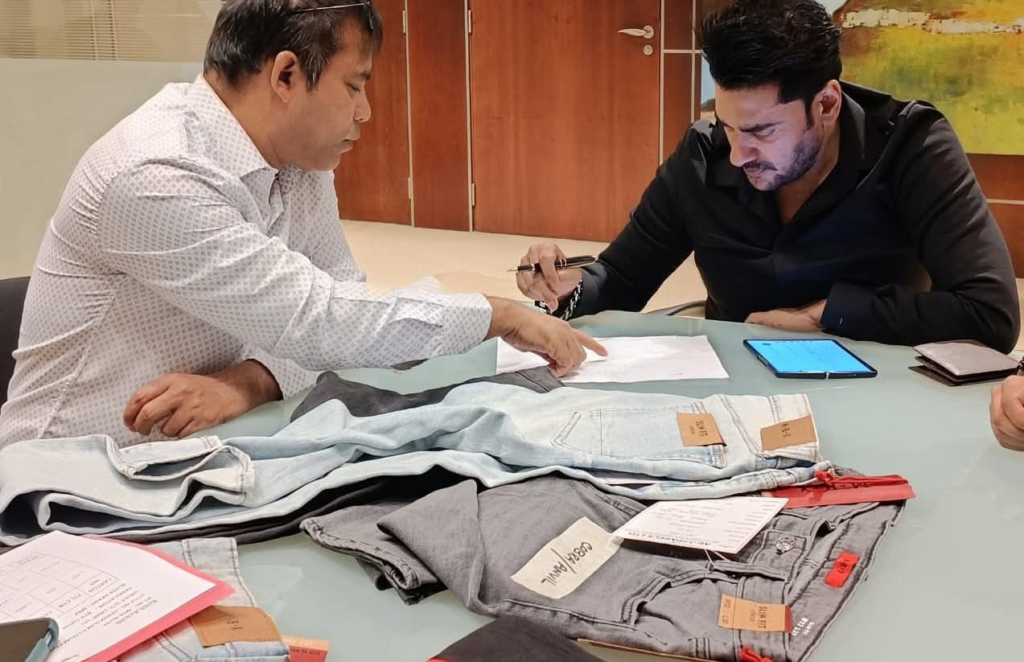
The conversation may sound casual at first:
“There is an opportunity.”
“Some funds need to be transferred.”
“You will receive a commission.”
“It is safe.”
“Many people are doing it.”
After 28 years of watching these patterns, I have learned one thing very clearly:
“When money travels in secrecy, truth usually travels separately.”
What surprised me most is that some of the intermediaries themselves may not fully understand who is actually behind the transactions. One person knows another person, who knows another person, and somewhere far above the chain, the real source remains hidden.
This made me realize something important and has driven me writing this article.
Not every participant in these systems starts as a criminal. Sometimes people become involved through trust, financial pressure, curiosity, or the attraction of quick profit. Some may believe they are helping with a normal business transaction. Others convince themselves that if the money is real, then the deal must also be real.
But over time, I understood that there is a dangerous difference between real opportunity and hidden risk.
Many of these operations are connected to fraud, money laundering, illegal financial movement, fake trade transactions, or other underground activities. Even when the money itself exists, participating without clear legal transparency can create serious problems for innocent people.
Today, global banking systems are much stricter than before. Financial monitoring has become stronger. Large or unusual transactions can trigger investigations very quickly. In such situations, the person handling the transfer may face consequences long before the real organizers are discovered.
Looking back over 28 years, I have learned that easy money often arrives with complicated stories, secrecy, urgency, and emotional persuasion.
The methods may change with technology, but human psychology remains the same.
People are attracted by:
- trust,
- opportunity,
- greed,
- desperation,
- curiosity,
- and the hope of improving life quickly.
I decided to write this not as an accusation against anyone, but as a personal reflection based on long observation. The world of financial fraud and suspicious money movement has become more sophisticated than many people realize. Educated and experienced individuals can also become targets.
My biggest lesson is simple:
When money comes with secrecy, unclear origins, unusual commissions, or pressure to “just trust the process,” it is usually wiser to walk away.
Because in the end, reputation, peace of mind, and integrity are worth far more than any promised commission.
A Note to Readers
Thank you for taking the time to read my articles.
Each article on this website is based on real experience, learning, and thoughtful analysis. I share these insights with the intention of adding value to professionals, entrepreneurs, and anyone interested in global business.
All content published on this website, including articles, text, and insights, is the intellectual property of KAMAL AHMED unless otherwise stated.
If you find this content helpful, you are most welcome to share it with others. I kindly request that you do so by linking back to the original article and giving proper credit.
Let’s support and respect original work while growing together through knowledge.
— Kamal Ahmed
Entrepreneur | Business Observer | Global Trade Professional