
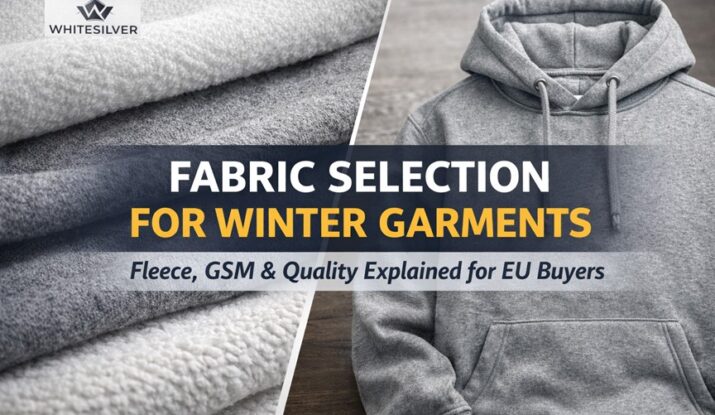
“A practical guide for EU buyers to choose the right fabric for hoodies, sweatshirts, and winter apparel.”
Introduction
When it comes to winter garments, fabric is everything.
Two hoodies may look identical—but the difference in fabric can completely change:
- Comfort
- Warmth
- Durability
- Price
For EU buyers, fabric selection is not just a technical decision—it directly affects customer satisfaction and brand reputation.
In this guide, we will break down how to choose the right fabric for winter garments, based on real production experience.
1. Understanding the Most Common Winter Fabrics

For hoodies and sweatshirts, the most commonly used fabrics are:
Cotton Fleece
- Soft and warm (brushed inside)
- Premium feel
- Higher cost
Cotton-Poly Fleece
- More durable
- Lower cost
- Slightly less soft
French Terry
- Loop structure inside (not brushed)
- Medium warmth
- Suitable for layering
Heavyweight Jersey
- Smooth surface
- Less warm
- Used for lighter winter styles
Practical Insight:
In many EU projects, cotton-poly fleece is selected to balance cost and durability, especially for large volume orders.
2. What is GSM (And Why It Matters So Much)


GSM = Grams per Square Meter
It indicates the weight and thickness of the fabric.
Typical GSM for winter garments:
- 240–280 GSM → Light winter
- 280–320 GSM → Standard winter
- 320–400 GSM → Heavyweight premium
Higher GSM = more warmth, structure, and cost
Common Mistake:
Choosing GSM based only on numbers without checking actual fabric feel.
Practical Insight:
In real production, two fabrics with the same GSM can feel very different depending on yarn quality and finishing.
3. Brushed vs Non-Brushed Fabric (Critical Difference)


This is one of the most important decisions in winter garments.
Brushed Fleece
- Soft, fluffy interior
- Warmer
- Premium feel
French Terry (Non-Brushed)
- Loop structure
- Less warm
- Better for transitional weather
Common Mistake:
Approving brushed fabric without testing for linting or pilling.
Practical Insight:
From experience, poor brushing quality can cause lint issues after washing.
4. Cotton vs Polyester (And the Right Blend)


100% Cotton
- Natural feel
- Breathable
- Premium positioning
Polyester Blend
- More durable
- Less shrinkage
- Cost-effective
Common Blends:
- 80% Cotton / 20% Polyester
- 60% Cotton / 40% Polyester
Practical Insight:
In many production programs managed by Whitesilver, blends are selected to reduce shrinkage while maintaining comfort.
5. Key Fabric Quality Checks (Don’t Skip This)


Before final approval, always check:
- Shrinkage test
- Color fastness
- Pilling resistance
- Fabric consistency
Common Mistake:
Skipping testing for faster production.
Practical Insight:
Fabric issues are one of the most common reasons for returns in EU markets.
6. Fabric Selection vs Cost (The Real Balance)


Fabric is usually the largest cost component in garment production.
Higher quality fabric:
- Increases cost
- Improves brand value
Lower quality fabric:
- Reduces cost
- Increases risk of complaints
Practical Insight:
In real sourcing decisions, the goal is not the cheapest option—but the best balance between cost and performance.
Final Thoughts
Fabric selection is not just a technical step—it is the foundation of your product.
The right fabric ensures:
- Customer satisfaction
- Fewer returns
- Strong brand positioning
The wrong fabric can damage both your product and your reputation.
What’s Coming Next
In the next blog, we will go deeper into the production stage:
Step-by-Step Garment Production Process (Factory Reality Explained)
This will give you a clear understanding of what happens inside the factory during bulk production.
About Whitesilver
Whitesilver supports EU buyers with sourcing and production management for winter garments—ensuring the right fabric selection, quality control, and smooth delivery from concept to shipment.