
Introduction
International commodity trading is often misunderstood as a simple buying and selling activity. In reality, successful transactions follow a structured, multi-stage process involving documentation, banking coordination, logistics, and clear communication between all parties.
Many deals fail not because of price or supply issues, but due to a lack of understanding of how professional commodity transactions are actually structured.
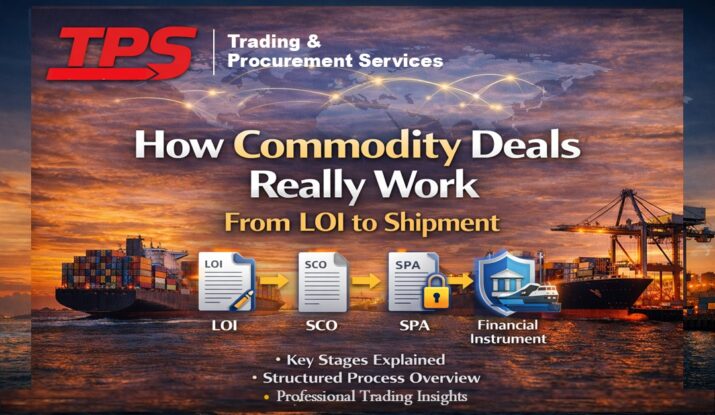
At TPS (Trading & Procurement Services), we follow a systematic and transparent approach to ensure smooth execution. Based on our practical experience, this guide explains how serious commodity deals are structured—from initial inquiry to final shipment.
Stage 1: Buyer Preparation
Every successful transaction begins with a prepared and capable buyer.
Key elements include:
- A clear and structured LOI (Letter of Intent)
- Defined product specifications and quantity
- Destination port and delivery terms
- Understanding of payment instruments (SBLC, LC, TT)
- Confirmed financial capability
Why this matters:
An unprepared buyer creates delays and uncertainty from the very beginning.
Stage 2: Offer & Negotiation (SCO / FCO Stage)
Once the buyer submits a proper LOI, the supplier issues an SCO (Soft Corporate Offer) or FCO (Full Corporate Offer).
This stage includes:
- Price indication
- Product specifications
- Delivery terms
- Payment structure
Important insight:
Professional negotiations focus not only on price but also on the transaction structure, which defines how secure and executable the deal will be.
Stage 3: Contract Agreement (SPA)
After both parties agree on key terms, a formal SPA (Sales & Purchase Agreement) is signed.
The SPA defines:
- Rights and obligations of both parties
- Payment terms and instruments
- Delivery schedule
- Documentation requirements
Why this is critical:
The SPA is the legal foundation of the transaction. A well-structured contract prevents misunderstandings and protects both sides.
Stage 4: Financial Instrument Issuance
This is one of the most important stages in commodity trade.
Typical instruments include:
- SBLC (Standby Letter of Credit)
- LC (Letter of Credit)
Process:
- Buyer arranges issuance through their bank
- Instrument is advised and verified
- Seller proceeds based on confirmed financial security
Key point:
In professional trade, execution begins only after financial instruments are in place.
Stage 5: Execution & Shipment
Once the financial structure is secured, the supplier initiates execution.
This stage includes:
- Product allocation or production
- Logistics arrangement
- Port handling and shipping
- Preparation of shipping documents
Common documents:
- Bill of Lading (B/L)
- Commercial Invoice
- Packing List
- Certificate of Origin
Stage 6: Document Presentation & Payment
After shipment, the seller presents documents as per the agreed terms.
Process:
- Documents submitted to the bank (for LC) or directly to buyer
- Verification of compliance
- Payment released according to contract
Outcome:
A successful transaction is completed when payment is secured and goods are delivered as agreed.
Why Many Deals Fail
Understanding the structure is essential because most failed deals share common issues:
- Weak or unclear LOI
- Lack of financial readiness
- Misunderstanding of payment instruments
- Unrealistic expectations on pricing or terms
- Poor communication between parties
These issues can disrupt even potentially good opportunities.
TPS Approach to Structured Trading
At TPS, we follow a disciplined and professional approach:
- Clear and transparent transaction flow
- Alignment with international trade practices
- Use of bank-supported payment instruments
- Focus on serious and capable buyers
Our goal is to ensure that every transaction is secure, efficient, and executable.
Key Takeaway
Commodity trade success depends on structure, preparation, and professionalism—not just price.
Buyers who understand and follow the proper transaction flow are more likely to achieve smooth and successful deals.
Conclusion
A well-structured commodity transaction minimizes risk, builds trust, and ensures efficiency for both buyer and seller. By understanding each stage—from LOI to shipment—buyers can approach international trade with confidence and clarity.
At TPS, we are committed to working with buyers who value structured and professional trade practices.
Next Step
Before proceeding, we recommend reviewing our TPS policy on payment instruments and transaction procedures:
Serious buyers may submit their LOI with full bank details to initiate discussions.