
“A practical guide for EU buyers to develop their own winter clothing brand—from idea to finished product.“
Introduction
In today’s fashion market, many EU businesses are moving toward private label clothing.
Instead of selling generic products, brands want:
- Their own identity
- Custom designs
- Unique positioning
But building a private label collection is not just about design—it requires:
- Planning
- Technical understanding
- Reliable production
In this guide, we will walk through how EU brands develop winter collections step by step.
1. Concept Development (Where Every Brand Starts)

Every collection begins with a concept.
This includes:
- Target market (budget / premium)
- Style direction (basic, streetwear, minimal)
- Color themes
This stage defines your brand identity.
Practical Insight:
Successful brands focus on clear positioning, not too many random designs.
2. Design & Tech Pack Development

Your ideas are converted into technical documents.
A tech pack includes:
- Design sketch
- Measurements
- Fabric details
- Print/embroidery specifications
Common Mistake:
Starting production without a complete tech pack.
Practical Insight:
In private label projects, a detailed tech pack ensures factories understand your exact requirements.
3. Fabric & Material Selection

Fabric plays a major role in brand perception.
For winter collections:
- Cotton fleece (premium feel)
- Cotton-poly blends (durability + cost balance)
Choice depends on your price level and target customer.
Practical Insight:
In many private label programs managed by Whitesilver, fabric selection is aligned with brand positioning—not just cost.
4. Sampling & Product Development

Sampling is where your concept becomes a real product.
Stages include:
- Development sample
- Fit sample
- Pre-production (PP) sample
This is where you refine:
- Fit
- Quality
- Details
Common Mistake:
Approving samples too quickly without testing.
5. Branding Elements (Your Identity)
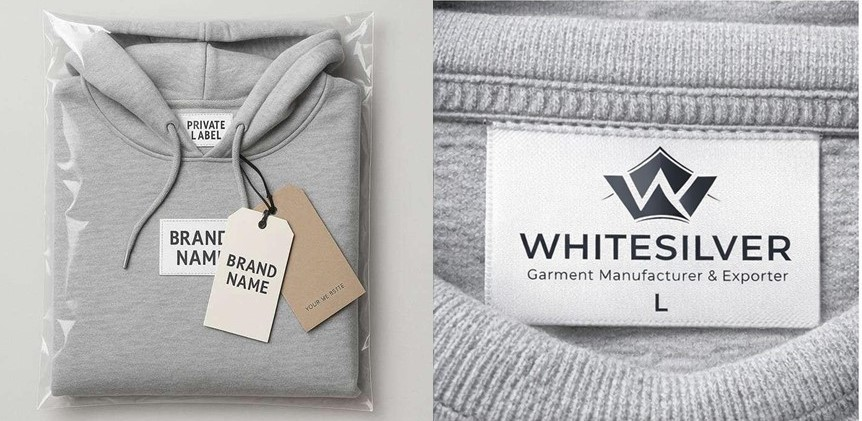
Private label is not just the product—it’s the identity.
Branding includes:
- Neck labels
- Hang tags
- Packaging
- Logo placement
Practical Insight:
Strong branding increases perceived value—even with simple designs.
6. Bulk Production Planning

Before production:
- Confirm order quantity
- Define size breakdown
- Finalize timeline
Proper planning avoids delays and stock imbalance.
7. Quality Control & Final Delivery

Final steps include:
- Quality inspections
- Packing
- Shipment
Ensures your products are ready for market.
Practical Insight:
In private label projects, consistent quality is critical to building long-term brand reputation.
Final Thoughts
Building a private label winter collection is a structured process—not just design and production.
Success depends on:
- Clear concept
- Correct fabric
- Strong quality control
- Reliable production partner
For EU brands, this approach creates:
- Strong identity
- Better margins
- Long-term growth
What’s Coming Next
In the next blog, we will explore:
Packaging, Labeling & Export Documentation for EU Apparel Orders
This will help you understand compliance and shipment requirements.
About Whitesilver
Whitesilver supports EU buyers in developing private label winter collections—from concept and sampling to production and final delivery—ensuring quality, consistency, and brand alignment.