
Introduction
In international commodity trade, intermediaries play a common and often necessary role in connecting buyers and sellers across different markets. However, the presence of multiple intermediaries—especially unverified or unauthorized ones—can also create confusion, delays, and increased risk.
Many transactions fail not because of issues between the buyer and seller, but due to miscommunication, lack of authority, or unrealistic expectations within intermediary chains.
At TPS (Trading & Procurement Services), we work within a structured and professional framework. Based on our practical experience, this guide explains the role of intermediaries, associated risks, and best practices for working effectively in commodity trade.
Who Are Intermediaries in Commodity Trade?
Intermediaries are individuals or entities that facilitate communication and negotiation between buyers and sellers.
Common types include:
- Brokers: Connect parties and help initiate discussions
- Mandates: Authorized representatives of a buyer or seller
- Facilitators: Assist in communication or coordination
- Consultants: Provide market or transaction support
Their involvement can be valuable when structured properly.
Types of Intermediaries
Understanding the level of authority is critical:
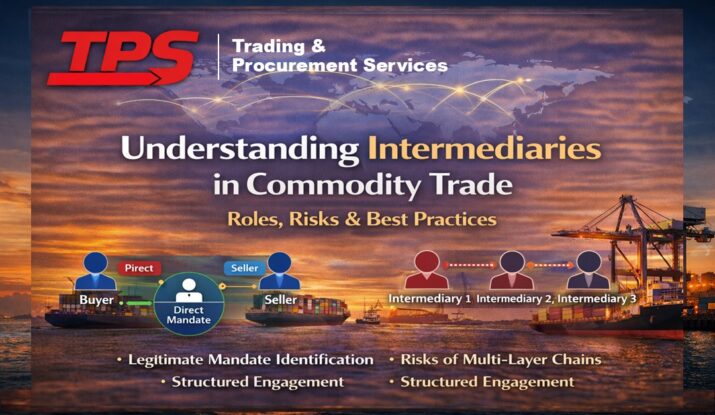
1. Direct Mandate
A direct mandate is officially authorized by the buyer or seller and has clear communication authority.
2. Broker
A broker introduces opportunities and may support negotiation but typically does not hold formal authority.
3. Multi-Level Intermediaries
These involve chains of multiple contacts between the buyer and seller.
Important Insight:
The longer the intermediary chain, the higher the risk of miscommunication, delays, and inconsistencies.
The Positive Role of Intermediaries
When structured correctly, intermediaries can add real value:
- Access to new markets and networks
- Bridging geographical and communication gaps
- Supporting negotiation and coordination
- Providing local or industry knowledge
Professional intermediaries contribute to smoother transactions.
Risks of Unstructured Intermediaries
Uncontrolled or unverified intermediary involvement can create serious challenges:
- Fake mandates: Individuals claiming authority without proof
- Information distortion: Miscommunication between multiple layers
- Price manipulation: Unauthorized changes to pricing
- Delays: Extended communication chains slow down execution
- Lack of accountability: No clear responsible party
Key Reality:
Many failed commodity deals are caused not by buyers or sellers, but by unstructured intermediary chains.
How to Identify a Legitimate Mandate
Buyers should verify intermediaries carefully before proceeding.
Checklist:
- Clear authorization from buyer or seller
- Direct communication access when required
- Understanding of transaction structure (LOI, SCO / FCO, SPA, etc.)
- Professional and consistent communication
- Ability to explain deal terms clearly
A legitimate mandate operates transparently and professionally.
Best Practices for Working with Intermediaries
To ensure efficient transactions, buyers should follow these principles:
- Limit the number of intermediaries involved
- Prefer direct mandates over long chains
- Verify authority at an early stage
- Maintain clear and documented communication
- Avoid relying on verbal commitments without structure
Structured engagement reduces risk and improves execution.
Common Buyer Mistakes
Many buyers unintentionally create complications by:
- Engaging with multiple intermediaries simultaneously
- Failing to verify mandate authority
- Trusting unverified information
- Allowing too many communication layers
These mistakes often lead to confusion and failed negotiations.
TPS Approach to Intermediaries
At TPS, we follow a disciplined and transparent approach:
- Preference for direct buyers or officially authorized mandates
- Limited and structured intermediary involvement
- Clear communication channels
- Strict adherence to professional transaction procedures
Our goal is to ensure efficiency, clarity, and reliability in every transaction.
Key Takeaway
Intermediaries are a part of commodity trade, but their value depends on structure, transparency, and proper authorization.
Working with too many or unverified intermediaries increases risk and reduces the likelihood of successful deal execution.
Conclusion
Understanding the role of intermediaries is essential for navigating international commodity trade effectively. Buyers who prioritize structure, clarity, and verification are more likely to achieve successful outcomes.
At TPS, we encourage all parties to maintain professional standards and avoid unnecessary complexity in deal structures.
Next Step
Before proceeding with any transaction, we recommend reviewing our TPS policy on payment instruments and procedures:
Serious buyers or authorized mandates are welcome to submit their LOI with full bank details to initiate discussion.